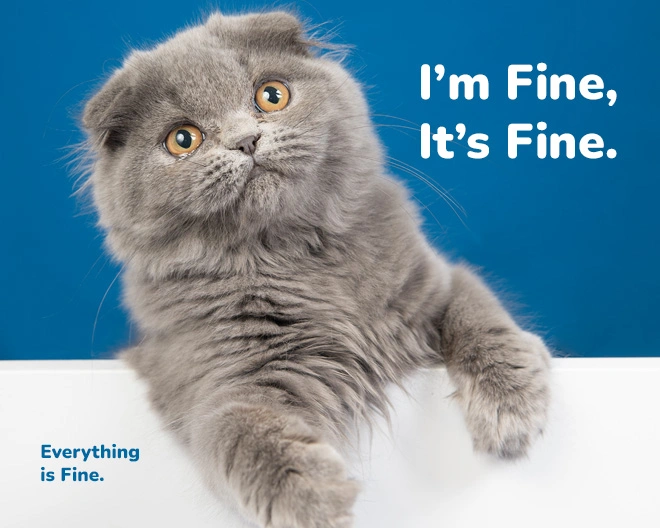
Talking about mental health isn’t always easy. Stigma, misconceptions, and discomfort often get in the way of open discussions. But what if humor could help break the ice?
In recent years, memes have become an unexpected yet powerful tool for starting mental health conversations. These bite-sized, relatable images and jokes have the power to normalize struggles, reduce stigma, and create connections in a way that feels lighthearted and accessible.
Why Memes Work
Memes are a cultural phenomenon—they spread rapidly online, offering a quick and relatable way to express thoughts and emotions. They give people a nonverbal way to communicate what they’re thinking or feeling, often making tough topics easier to talk about.
For many, seeing a meme about struggling to sleep because of racing thoughts or forgetting why they walked into a room instantly resonates. And when we relate to humor, we feel less alone.
Breaking Down Stigma Through Humor
One of the biggest barriers to mental health discussions is stigma—the fear of judgment or misunderstanding. Memes offer a safe, low-pressure way to acknowledge mental health struggles without feeling exposed.
Sharing a meme that humorously captures the experience of anxiety, ADHD, or depression can create a moment of camaraderie—a simple way of saying, “You’re not the only one.” Over time, this can normalize conversations about mental health, making them feel less intimidating.
Encouraging Open Dialogue
Memes do more than just make people laugh—they can spark real conversations.
For example, someone might come across a meme about overthinking every social interaction and send it to a friend, saying:
“This is literally me. I’ve been struggling with this a lot lately—can we talk?”
That simple exchange opens the door for honest discussion. Instead of forcing a heavy conversation, the meme acts as a gentle starting point, making it easier to share thoughts and feelings.
Building Supportive Online Communities
Beyond one-on-one conversations, memes have contributed to the rise of supportive mental health communities online.
Platforms like Instagram, Reddit, and X (formerly Twitter) are filled with pages dedicated to mental health memes—spaces where people can share experiences, find validation, and connect with others who truly get it. These communities provide:
✅ A sense of belonging – Knowing others experience the same struggles.
✅ Support and encouragement – Finding comfort in shared humor.
✅ Coping strategies and insights – Learning from others in similar situations.
For many, these online spaces serve as a lifeline, offering comfort and reassurance during difficult times.
Sharing Memes Responsibly
While memes are a great tool for mental health awareness, it’s important to use them responsibly. Not all mental health memes are helpful—some may trivialize serious struggles or reinforce harmful stereotypes.
Before sharing, ask:
🔹 Does this meme encourage understanding and support?
🔹 Could this be harmful or dismissive to someone struggling?
🔹 Is this meme making fun of mental health, or helping normalize it?
Memes should supplement, not replace, real mental health education and support. While they can start conversations, professional resources and services remain essential for deeper healing.
Final Thoughts
Memes may seem lighthearted, but they hold the power to break barriers, challenge stigma, and spark meaningful mental health conversations.
By sharing relatable content that acknowledges common struggles, we create connections, reduce isolation, and build supportive communities. So, the next time you come across a mental health meme that resonates, consider sharing it—you never know whose day it might brighten or what conversation it might start.
References
- Schroeder, J., & Green, M. C. (2021). The Role of Humor in Mental Health Communication: Can Laughter Reduce Stigma? Journal of Applied Social Psychology, 51(3), 523-540.
- Hollett, R. C., & Allen, C. (2022). Memes, Mental Health, and Online Communities: The Impact of Humor in Reducing Social Stigma. Digital Psychology, 4(2), 129-147.
- McCulloch, G. (2019).Because Internet: Understanding the New Rules of Language. Riverhead Books.