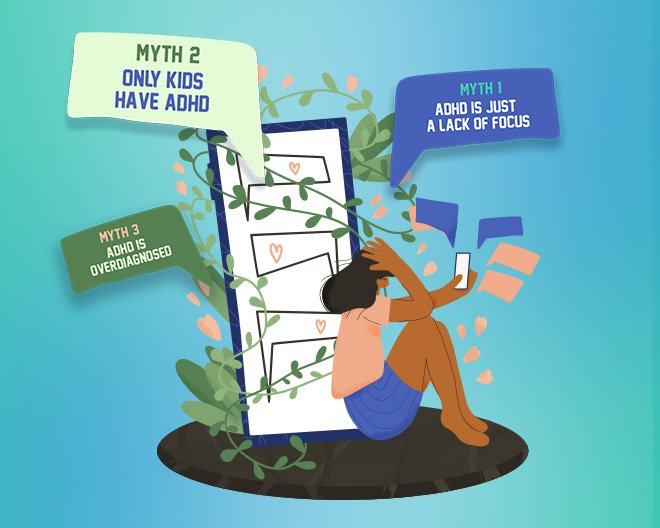
ADHD—most people have heard of it, but not everyone truly understands it. Maybe you know someone with ADHD, recently received a diagnosis yourself, or simply want to learn more. Unfortunately, misconceptions about ADHD are everywhere, making it harder for people to get the support they need.So, let’s clear up the myths, raise awareness, and shift the conversation toward understanding and acceptance.
Myth #1: ADHD is Just a Lack of Focus
ADHD isn’t just about struggling to focus—it’s much more complex. People with ADHD often hyperfocus on things they enjoy but have difficulty regulating attention when tasks are boring or overwhelming.
Beyond focus, ADHD impacts:
🔹 Organization – Keeping track of tasks and deadlines can feel impossible.
🔹 Time Management – The concept of time often feels blurry, leading to lateness or procrastination.
🔹 Impulse Control – Acting before thinking can be a challenge, from blurting out thoughts to making impulsive decisions.
ADHD brains are wired differently, not deficiently—they just work in a unique way.
Myth #2: Only Kids Have ADHD
ADHD doesn’t magically disappear in adulthood—many adults struggle with symptoms well into their 20s, 30s, and beyond.
For years, ADHD was underdiagnosed in adults, particularly in women, who often present symptoms differently. Many people are only now getting diagnosed later in life, realizing that what they once saw as “personality quirks” were actually signs of ADHD.
Symptoms may shift over time, but the challenges remain. Kids with ADHD grow into adults with ADHD.
Myth #3: ADHD is Overdiagnosed
Some believe ADHD is overdiagnosed, but research suggests otherwise. The reality? ADHD has long been misunderstood and underdiagnosed, especially in:
✅ Girls and women – Symptoms often appear as daydreaming or emotional sensitivity rather than hyperactivity.
✅ People of color – ADHD diagnoses have historically skewed toward white, middle-class children, leaving many without access to proper evaluation.
✅ Adults – Many were dismissed as “lazy” or “unmotivated” rather than being assessed for ADHD.
We’re not overdiagnosing ADHD—we’re finally recognizing it more accurately.
How to Better Support People with ADHD
Now that we’ve debunked some myths, here’s how to support and empower those with ADHD:
🧠 Educate Yourself – Learn about ADHD from reliable sources to replace outdated assumptions with facts.
⏳ Be Patient – People with ADHD process the world differently, and tasks that seem simple to others can be overwhelming. A little patience goes a long way.
📅 Provide Structure – ADHD brains thrive with routines. Small things like to-do lists, reminders, or visual schedules can be life-changing.
🚶♂️ Encourage Breaks – Focus can be inconsistent, so taking breaks helps reset attention and energy. Even a quick stretch or walk can make a difference.
By busting myths, raising awareness, and offering practical support, we can create a more inclusive world that embraces neurodiversity. ADHD comes with challenges, but it also brings creativity, innovation, and unique strengths worth celebrating.
References
- American Psychiatric Association. (2022). Diagnostic and Statistical Manual of Mental Disorders (5th ed.-TR). Arlington, VA: American Psychiatric Publishing.
- Centers for Disease Control and Prevention. (2021). Attention-Deficit/Hyperactivity Disorder (ADHD). Retrieved from https://www.cdc.gov/ncbddd/adhd/index.html
- Barkley, R. A. (2021).Taking Charge of Adult ADHD. Guilford Press.